Immigration Consultant in Toronto, Ontario
Toronto and the Greater Toronto Area (~6.4M residents across 25 municipalities) is by every measure the largest immigration market in Canada — roughly 30% of all Canadian permanent residence landings each year settle in the GTA, and almost every major immigration program (Express Entry, OINP, spousal sponsorship, Super Visa, PGP, refugee protection) has its highest per-capita file volume here. Toronto is also one of the most ethnically diverse cities in the world: more than 51% of GTA residents are foreign-born, and roughly half identify as a visible minority.
Toronto's immigration demand splits across several distinct profiles: South Asian (Indian, Pakistani, Bangladeshi, Sri Lankan, Nepali) families across Scarborough, North York, Etobicoke, and the surrounding 905 belt — Halani's deepest practice area; Chinese-Canadian families across North York, Markham, and Richmond Hill; Filipino-Canadian community across Bathurst-Wilson, North York, and the broader downtown; Iranian and Arab communities across North York, Thornhill, and the Lawrence-Bathurst corridor; African and Caribbean communities across Rexdale, Jane-Finch, and Scarborough; and a substantial newer-arrival population from Latin America, West Africa, and Eastern Europe across the wider GTA.
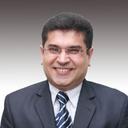
Halani Immigration Services Inc., led by Shoukat Qumruddin Halani, RCIC-IRB (CICC No. R711322), operates its home office at 1940 Eglinton Avenue East in Scarborough — central to Toronto's South Asian, Caribbean, and East African client base. We work files across the entire GTA: Downtown, Yorkville, Annex, Liberty Village, King West, Riverdale, Leslieville, Beaches, North York, Etobicoke, Scarborough, East York, Mississauga, Brampton, Markham, Richmond Hill, Vaughan, Oakville, Burlington, Pickering, Ajax, Whitby, Oshawa, and Newmarket. We consult in English, Urdu, Hindi, Gujarati, and Katchi, with interpreter support for Punjabi, Tamil, Tagalog, Mandarin, Arabic, and Farsi.
Programs most-used by Toronto clients
The pathways below are the ones we work on most frequently with clients living in or moving to Toronto. Each links to a detailed service page.
Express Entry (FSW + CEC)
Toronto's PGWP-to-PR pipeline is the largest in Canada. University of Toronto, Toronto Metropolitan University (TMU/Ryerson), York, OCAD, Seneca, George Brown, Centennial, Humber, Centennial all anchor heavy Express Entry CEC volume.
Read more →OINP — Ontario PNP
OINP Human Capital Priorities (Express Entry-linked), Masters Graduate Stream (Ontario master's grads), PhD Graduate, Employer Job Offer (In-Demand Skills + Foreign Worker + International Student), French-Speaking Skilled Worker, Entrepreneur stream. Highest-volume PNP in Canada.
Read more →Spousal Sponsorship
Outland (through New Delhi, Islamabad, Manila, Beijing visa offices) or inland. Toronto is the highest-volume sponsoring city in Canada — heavy file volume in Pakistani, Indian, Chinese, Filipino, Iranian, and Sri Lankan corridors.
Read more →Parents & Grandparents (PGP) + Super Visa
PGP lottery + Super Visa for parents/grandparents of Toronto-resident Canadian citizens and PRs. Heaviest Super Visa volume in Canada — particularly Pakistani, Indian, and Chinese parent visits.
Read more →Refugee Protection & IRB
Toronto is the largest refugee-claim city in Canada. RPD hearings at the IRB Toronto registry (74 Victoria Street, +180 Queen Street West), RAD appeals, PRRA, and Federal Court judicial review. RCIC-IRB licensed across all four IRB divisions.
Read more →Study Permit + PGWP + post-graduate planning
U of T, TMU, York, Seneca, George Brown, Centennial, Humber, OCAD — Toronto DLI portfolio. PGWP-eligibility planning, study-permit refusal reapplication, study-to-PR pipeline (CEC + OINP Masters/PhD).
Read more →What we see across Toronto files
Toronto's South Asian (Indian, Pakistani, Bangladeshi, Sri Lankan) population — concentrated in Scarborough, Etobicoke, and the surrounding GTA — drives the majority of our active file volume. Express Entry (FSW + CEC) from this community is heavy in IT (NOC 21231/21232 software engineers and developers), finance (NOC 11100/11101 accountants and analysts), engineering (NOC 21300/21301 civil and mechanical), healthcare (NOC 31301 RNs), and trades (NOC 73300 truck drivers, NOC 72200 electricians). Spousal sponsorship is high volume across all corridors. Super Visa from Pakistan and India is one of our highest-frequency file types.
Toronto's tech sector — Shopify, OpenText, Wattpad, Wealthsimple, Cohere, FreshBooks, plus the Canadian arms of every major US tech firm — anchors heavy Express Entry CEC + OINP Tech volume. NOC 21231 (software engineers and designers) and NOC 21232 (software developers and programmers) files dominate; the OINP Human Capital Priorities tech-targeted draws are a regular landing point for sub-cutoff federal CRS profiles.
Toronto's Chinese-Canadian community (North York, Markham, Richmond Hill, and downtown) drives substantial study-permit + PGWP volume, family sponsorship through IRCC Beijing and Hong Kong, OINP Masters Graduate (for U of T / York master's grads), and Start-Up Visa applications for Toronto-based entrepreneurs.
Toronto's Filipino-Canadian community (Bathurst-Wilson, North York, and the wider GTA) drives heavy healthcare-pipeline volume — Filipino RNs through Manila, OINP Healthcare and federal Express Entry CEC after PGWP, and the Home Care Worker pilots. The community has deep institutional anchors at Toronto-area hospitals (UHN, Sinai, Sunnybrook, SickKids, Scarborough Health Network).
Toronto's refugee-claim volume is the largest in Canada. RPD hearings are scheduled at the IRB Toronto registry. RAD appeals, PRRA following negative decisions, and Federal Court judicial review for legal-error grounds are routine work. Halani's RCIC-IRB licence covers all four IRB divisions (RPD, RAD, ID, IAD), which matters for Toronto's refugee + appeals practice.
Why Toronto clients choose Halani
Three reasons matter for Toronto's file profile. First, language fluency that matches our client base — Urdu, Hindi, Gujarati, Katchi, plus interpreter support for Punjabi, Tamil, Tagalog, Mandarin, Arabic, Farsi. Toronto's South Asian and Filipino communities are core to our practice; consultation in the client's first language matters for understanding what is actually going on.
Second, RCIC-IRB licensing across all four IRB divisions — RPD (refugee protection), RAD (refugee appeals), ID (admissibility / detention), IAD (sponsorship appeals, residence-obligation appeals). Most Toronto consultants are not IRB-licensed; we are. This matters for any file that involves a refused sponsorship, a residence-obligation breach, or refugee protection.
Third, in-person availability at our Eglinton/Scarborough office plus full virtual consultation. Many Toronto clients prefer at least one in-person meeting at the start of a file — we offer that. Most files thereafter run on encrypted document upload + Zoom, so there's no transit cost for ongoing work.
IRCC office serving Toronto: IRCC Toronto + IRB Toronto
Toronto residents are served by the IRCC Toronto office (which handles certain in-Canada interviews, PR card services, and citizenship grants) and by the IRB Toronto registry at 74 Victoria Street + 180 Queen Street West (which handles RPD hearings, RAD appeals, IAD appeals, and admissibility hearings for the Ontario region). Biometrics for visa applications are collected at Service Canada / IRCC biometrics-collection partners across the GTA.
For overseas-routed applications, the visa office depends on country of nationality. Pakistani files route through IRCC Islamabad; Indian files through New Delhi (with Chandigarh VAC for Punjab); Chinese files through Beijing or Hong Kong; Filipino files through Manila; Iranian files through Ankara or the Centralized Network (for in-Canada Special Measures applicants); Nigerian files through Lagos. Toronto's diversity means we work files across nearly every visa office IRCC operates.
Real Toronto outcomes
Karachi to North York on Express Entry FSW (NOC 21232 software developer) — COPR in 11 months. Manila to Scarborough on Filipino RN pipeline + OINP Healthcare. New Delhi to Etobicoke on outland spousal sponsorship — approved 9 months. Tehran to Thornhill on Iranian Special Measures + Express Entry CEC. Lahore parents to Mississauga on Super Visa — approved on first submission. Sri Lankan refugee claim heard at IRB Toronto, positive RPD determination. Real outcomes from real Toronto-area files.
Read all success stories →Frequently asked questions — Toronto
Where is Halani's Toronto office?
Should I hire an immigration lawyer or an immigration consultant in Toronto?
Are immigration consultant fees in Toronto cheaper than immigration lawyer fees?
I'm a Toronto international student on PGWP. Best PR pathway?
I have a refugee claim hearing scheduled at IRB Toronto. Can Halani represent me?
How long does outland spousal sponsorship from Toronto to Pakistan / India typically take?
Do I need to come to your office, or can the whole file be done virtually?
I'm a Toronto Canadian citizen wanting to sponsor my parents from Pakistan. PGP or Super Visa?
Also serving nearby
We work with clients across the wider area. Visit any of these adjacent service pages:
Free assessment for clients in Toronto
Halani Immigration Services Inc. (RCIC-IRB R711322) — Toronto-based, serving Toronto clients in person and online. Initial consultation is free and you don't pay until you're sure you want to proceed.